
Automotive Lift Requirements for Servicing Electric Vehicles: Weight, Lift Points, and Battery Pack Clearance
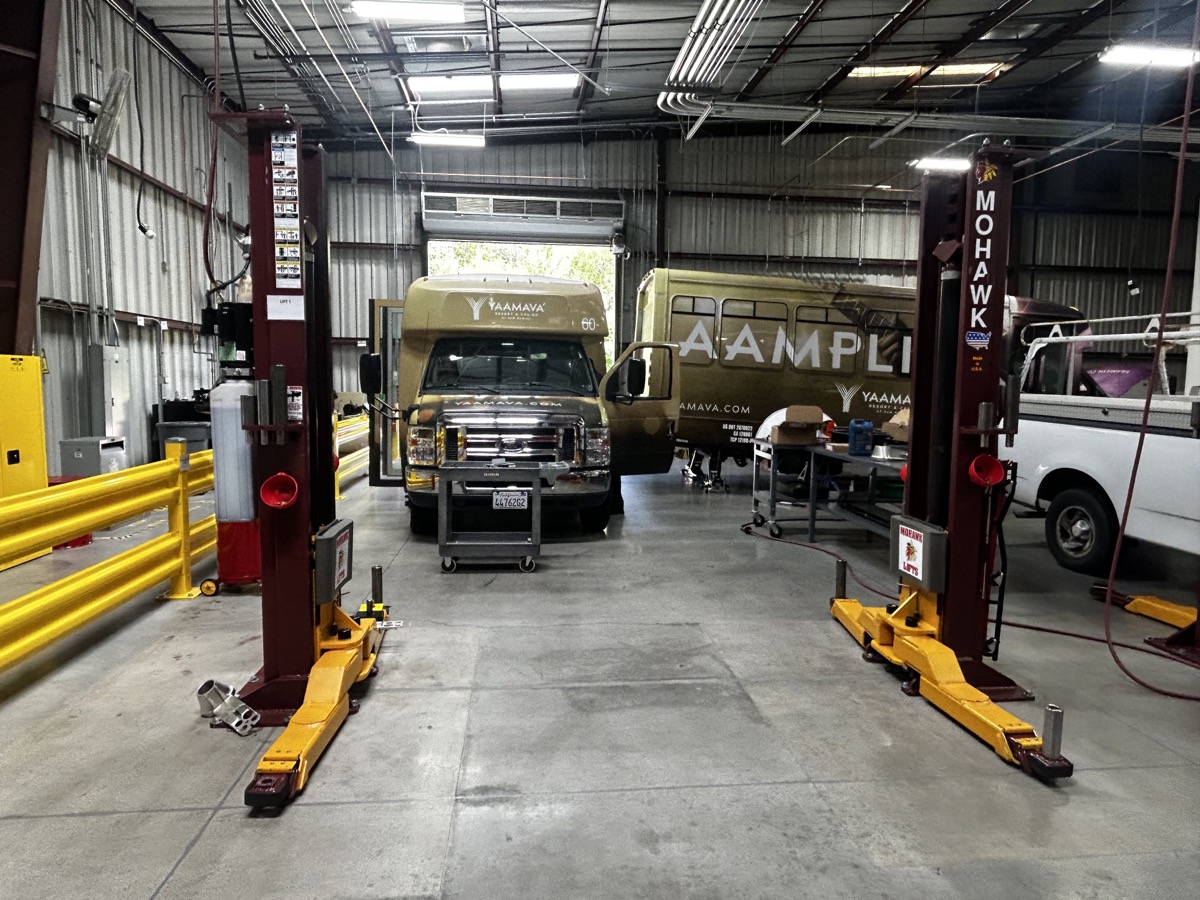
Automotive Lift Requirements for Servicing Electric Vehicles
Electric vehicles create unique challenges for automotive lift operations that many shops discover only after accepting their first EV service work. Battery pack weight, unconventional lift point locations, and battery pack ground clearance requirements mean that lifts adequate for conventional vehicles may be inadequate—or unsafe—for EV service.
This guide covers the specific lift requirements and modifications necessary to safely service electric vehicles. If your shop currently services conventional vehicles only but EV work is inevitable in your market, understanding these requirements helps you prepare infrastructure before customers start requesting EV service.
Why EVs Create New Lift Requirements
Electric vehicle design fundamentally differs from conventional vehicles in ways that directly affect lift operation. Understanding these differences explains why shops need specific capabilities for EV service.
Key EV design differences affecting lift work:
- Battery pack weight and location: Batteries typically weigh 900-1,800 lbs and mount in the floor, raising total vehicle weight and lowering the center of gravity
- Non-standard frame design: Many EVs use skateboard chassis designs without traditional frame rails
- Limited ground clearance: Battery packs reduce ground clearance below conventional vehicle standards
- Weight distribution: Battery placement creates different weight distribution than engine-and-transmission configurations
These differences mean that a shop equipped to handle any conventional vehicle may still be unprepared for EVs without specific modifications.
Practical takeaway: Before accepting EV service work, request the manufacturer’s service manual section covering lift points and lift specifications. Most EV manufacturers provide this information free to repair facilities. Review these specifications against your current lift capabilities before agreeing to work on vehicles your equipment can’t safely handle.
EV Weight Exceeds Conventional Vehicle Assumptions
The most immediate challenge is weight. Battery packs add 900-1,800 lbs compared to equivalent conventional vehicles, pushing many EVs beyond the capacity limits of lifts sized for their vehicle class.
Weight comparisons by vehicle type:
- Tesla Model 3 Long Range: 4,048 lbs (comparable BMW 3-Series: 3,500 lbs)
- Ford F-150 Lightning: 6,500 lbs (conventional F-150: 4,500-5,500 lbs)
- Rivian R1T: 7,148 lbs (comparable Toyota Tundra: 5,500 lbs)
- GMC Hummer EV: 9,640 lbs (comparable Chevy Suburban: 5,600 lbs)
A 10,000 lb two-post lift can safely handle any conventional passenger car. But that same lift is marginal or inadequate for EV sedans like the Tesla Model S Plaid (4,766 lbs) or completely inadequate for electric trucks.
Capacity requirements by EV category:
- EV sedans and compact SUVs: 12,000 lb minimum lift capacity
- EV full-size SUVs: 14,000-16,000 lb minimum capacity
- Electric pickups: 16,000-20,000 lb minimum capacity
- Heavy electric trucks (Hummer EV): 20,000+ lb capacity required
Operating lifts near capacity limits accelerates wear and creates safety margins inadequate for unexpected weight variations (aftermarket modifications, cargo, passenger loads).
Practical takeaway: Never operate lifts above 80% of rated capacity for regular service work. If your shop has 10,000 lb lifts and you’re considering accepting EV work, you need new lifts—not exceptions to capacity limits. The liability exposure from a capacity-related failure is catastrophic compared to the cost of proper equipment.
Locating EV Lift Points: Non-Standard Configurations
Conventional vehicles typically have lift points at predictable frame rail locations. EVs often lack traditional frame rails, requiring technicians to locate manufacturer-specified lift points that differ from conventional vehicle patterns.
Common EV lift point configurations:
- Skateboard chassis designs (Tesla, Rivian): Lift points integrate into battery pack frame structure
- Hybrid frame designs (Ford Lightning): Combine traditional frame elements with EV-specific reinforcements
- Unibody with battery integration (Nissan Leaf, Chevy Bolt): Lift points at reinforced unibody locations
Many EV manufacturers mark lift points with colored stickers or molded indicators on the underbody. However, these markers aren’t always visible under typical shop conditions (dirty vehicles, poor lighting, technician angle).
Critical mistakes to avoid:
- Assuming frame rail location: EVs may not have frames where conventional vehicles do
- Engaging battery pack housing: Lift pads must contact structural members, never battery pack casing
- Using standard lift arm positions: Arms often need different extension and rotation angles than conventional vehicles
Tesla specifically warns against engaging the battery pack with lift pads. Doing so can crack the battery housing, creating potential fire risk and voiding warranty coverage.
Practical takeaway: Maintain a lift point reference library with diagrams for every EV model you service. Many manufacturers provide these diagrams as free downloads. Print them, laminate them, and keep them in the shop where technicians can reference them before lifting unfamiliar vehicles. One lift point error can total a vehicle and trigger massive liability claims.
Battery Pack Ground Clearance Challenges
EV battery packs reduce ground clearance below what most conventional vehicles provide. This creates two problems: getting lifts under the vehicle, and safely positioning two-post lift arms without contacting the battery pack.
Ground clearance by EV model:
- Tesla Model 3: 5.5 inches
- Ford Mustang Mach-E: 5.7 inches
- Tesla Model X: 6.6 inches (lowered air suspension)
- Rivian R1T: 7.9 inches (standard)
Standard two-post lift arm assemblies when fully collapsed typically have 4-5 inches of clearance. This works for most conventional vehicles but becomes tight for lower-sitting EVs, especially those with lowered suspensions or wheel spacers.
Solutions for low-clearance EVs:
- Low-profile lift pads: 2-3 inch thick pads replace standard 4-5 inch pads
- Arm repositioning: Some lifts allow arms to be repositioned to different column heights
- Drive-on ramps: Use thin ramps to elevate the vehicle 1-2 inches before positioning arms
- Four-post lifts: Drive-on operation eliminates low-clearance arm positioning issues
Some shops install dedicated low-profile two-post lifts for EV service rather than modifying existing equipment. This prevents technicians from accidentally using standard pads on EVs or forgetting to swap pad sets.
Practical takeaway: If you regularly service lowered vehicles or EVs with minimal ground clearance, invest in low-profile lift pad sets rather than expecting technicians to improvise. A $200 pad set prevents thousands in battery pack damage from a single lift arm contact.
Adapters and Pads for EV-Specific Lift Points
Many EV lift points are smaller, located in recessed areas, or require specific pad shapes to distribute load properly. Standard universal lift pads designed for conventional vehicles often don’t work optimally for EVs.
EV-specific pad considerations:
- Smaller contact area: Some EV lift points are narrower than conventional frame rails
- Recessed locations: Lift points may sit in pockets requiring extended pad reach
- Load distribution requirements: Battery frame members may require specific pad shapes to distribute loads
Several manufacturers produce EV-specific lift pad adapter sets. These include:
- Tesla-specific pads: Designed for Tesla’s specific lift point geometry
- Universal EV pads: Adjustable pads accommodating multiple EV designs
- Manufacturer adapter kits: Some EV makers sell lift adapters through service parts channels
Quality EV pad adapter sets cost $150-400. This seems expensive until you consider that one battery pack contact incident can cause $5,000-20,000 in damage.
Practical takeaway: When purchasing EV-specific adapters, verify they’re compatible with your specific lift brand and model. Adapter sets designed for one lift manufacturer may not fit properly on other manufacturers’ lift arms. Get manufacturer confirmation before purchasing to avoid buying incompatible adapters.
Four-Post Lifts: The EV-Friendly Alternative
Four-post lifts avoid many EV lift point challenges by supporting vehicles via their tires rather than frame contact points. This makes them increasingly popular for shops with significant EV service volumes.
Four-post advantages for EV service:
- No lift point location required: Drive on, raise, done
- No battery pack contact risk: Runways contact tires only, battery pack never engaged
- Accommodates wide weight range: Same lift handles sedans through heavy trucks
- Stable for long-duration work: Battery and electrical diagnostics often take hours
The disadvantage remains limited undercarriage access compared to two-post systems. However, much EV service work involves wheel-off access (brake service, tire replacement) or electrical diagnostics that don’t require full undercarriage access.
Practical takeaway: Shops planning to increase EV service volume should strongly consider adding at least one four-post lift to their bay configuration. This provides a safe fallback for EVs that challenge two-post lift capabilities while also improving efficiency for tire and brake service that constitutes much EV shop work.
Electrical Safety Considerations for Lifted EVs
While lift selection focuses on mechanical safety, shops servicing EVs must also consider electrical safety when vehicles are elevated.
EV electrical safety concerns:
- High voltage system access: Many repairs require working near 400-800V electrical systems
- Lift grounding: Ensuring lifts are properly grounded to prevent static discharge
- Battery disconnect procedures: Many EVs require disconnecting high-voltage batteries before service
- Arc flash risk: Improper procedures create arc flash hazards during electrical work
These aren’t lift selection issues but operational safety requirements. However, they affect how you use lifts when servicing EVs versus conventional vehicles.
Practical takeaway: Require technicians servicing EVs to complete manufacturer-specific electrical safety training before performing lifted electrical work. Most EV manufacturers offer free online training covering high-voltage safety procedures. Document training completion for OSHA compliance and liability protection.
Planning for Future EV Weight Increases
Current EVs already exceed conventional vehicle weights, but upcoming EVs suggest weights will increase further as battery capacities grow and electric trucks proliferate.
Future weight trends:
- Larger battery packs: Range anxiety drives demand for bigger batteries, increasing weight
- Electric commercial vehicles: Amazon delivery vans and FedEx trucks going electric
- Electric heavy-duty trucks: Class 4-6 trucks adding significant weight demands
Shops installing lifts today should consider these trends when specifying capacity. A 14,000 lb lift adequate for current EVs may be marginal for vehicles arriving in 3-5 years.
Practical takeaway: When replacing lifts or planning shop expansions, specify lift capacity one step higher than current needs. The incremental cost is minimal, but the future-proofing value is substantial. Installing 16,000 lb lifts instead of 12,000 lb systems costs an extra $800-1,200 per lift but provides capacity runway for 10+ years of EV weight growth.
Does Your Shop Need EV-Specific Equipment?
Whether you need EV-specific lift capabilities depends on your current customer base and business model. Answer these questions to evaluate your situation:
Assessment questions:
- How many EVs do you currently service monthly? (If more than 5-10, you need dedicated capability)
- What percentage of new vehicles in your market are EVs? (Higher percentages mean inevitable future demand)
- Do your current lifts have adequate capacity for the EVs you see? (Check actual vehicle weights against lift ratings)
- Can you safely locate lift points on common EVs without special tools? (If no, you need reference materials and possibly adapters)
Shops in California markets are seeing rapid EV adoption. Shops in other markets may have more time to prepare. However, all markets are trending toward increased EV presence.
Practical takeaway: Create an EV service readiness plan even if you don’t currently service many EVs. Identify which equipment upgrades you’d need, what they cost, and at what customer volume the investment makes sense. This prevents making expensive rushed equipment decisions when EV service demand suddenly increases.
[PLACEHOLDER: Elite’s EV Service Capabilities]
[PLACEHOLDER: If Elite Auto Lift has specific EV service capabilities, training, or experience, describe them here. Include any EV-specific equipment, manufacturer training completed, or track record servicing particular EV models.]
When selecting lift service providers for EV-capable facilities, verify they understand EV-specific requirements and have experience with the additional safety considerations EVs create.
Prepare Your Shop for EV Service Demand
Elite Auto Lift provides lift installation, service, and consulting for shops preparing for increased EV service volume. We understand the equipment requirements and safety considerations that EV service creates.
Call (760) 666-0066 to discuss your shop’s EV service preparation, or request service online to schedule a consultation about lift capacity and EV-specific equipment needs.
Don’t wait until you damage a customer’s battery pack to discover your lifts aren’t adequate for EV service. Prepare infrastructure now while you have time to make deliberate decisions rather than expensive emergency purchases.
Need Professional Lift Service?
Elite Auto Lift provides expert automotive lift repair, installation, and inspection services throughout San Diego County and North County. Contact us for a free consultation.